Buildwise
Micro-Scale Builds Shape Future Methods
By Buildwise Editorial3 min read
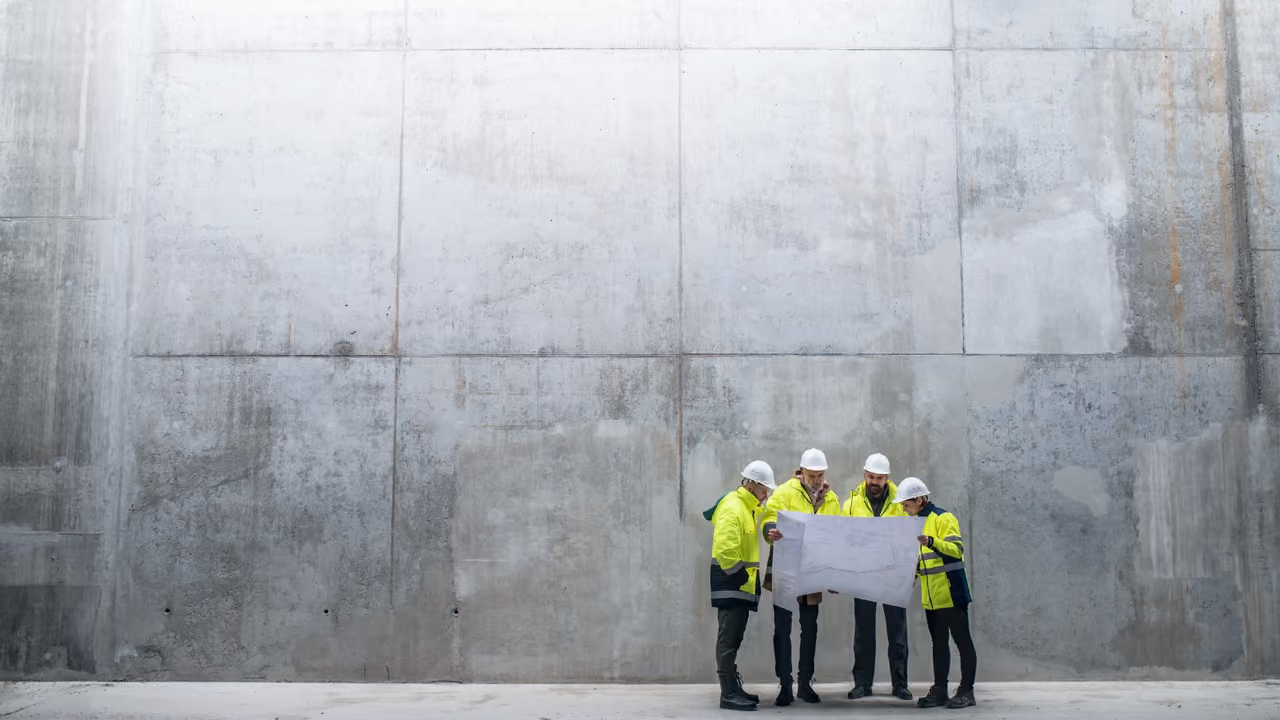
What if the future of construction didn’t lie in sprawling skyscrapers or massive infrastructure projects, but in something much smaller—micro-projects? These compact, focused builds are quietly reshaping how the construction industry experiments, learns, and evolves. Far from being mere side gigs, micro-projects act as living laboratories where new techniques are tested, refined, and proven before hitting the mainstream.
Understanding Micro-Projects Small Scale, Big Impact
Micro-projects are construction endeavors that typically involve limited scope, budget, and timeline. Think tiny homes, modular extensions, experimental pavilions, or small commercial spaces. Their modest scale makes them nimble, allowing teams to try out unconventional designs, materials, or building processes without the high stakes of large-scale developments.
What makes micro-projects fascinating is this very freedom. Without the burden of massive budgets or complex stakeholder demands, these projects become fertile ground for innovation. They invite risk-taking and creative problem-solving, often pushing boundaries that bigger projects can’t afford to explore.
How Micro-Projects Foster Innovation in Construction Methods
Innovation in construction often faces inertia. Traditional methods dominate because they are proven and reliable, while new techniques can seem risky or expensive to implement on a grand scale. Micro-projects break this cycle by serving as testbeds where innovative methods can be trialed in real-world conditions.
For example, new materials like cross-laminated timber (CLT) or 3D-printed concrete can be evaluated on a micro-project before being adopted widely. Similarly, cutting-edge technologies such as drone surveying, augmented reality for on-site visualization, or modular prefabrication techniques find their first practical applications here.
Micro-projects also accelerate feedback loops. With shorter timelines, the results of an innovation—whether success or failure—are quickly apparent. This rapid iteration allows teams to tweak or abandon ideas without costly delays, making innovation less intimidating and more accessible.
Case Studies Micro-Projects Leading Industry Change
- The Tiny House Movement has done more than offer minimalist living solutions. These small-scale builds have become proving grounds for sustainable construction techniques, such as solar integration, rainwater harvesting, and non-toxic insulation materials. Builders learn what works best in tight spaces, knowledge that informs larger residential projects aiming for sustainability.
- Modular Micro-Units in Urban Infill have demonstrated how prefabrication can drastically cut construction times and reduce waste. Pilot projects assembling entire apartment units off-site have paved the way for larger developers to embrace modular building as a mainstream approach to affordable housing.
- Experimental Pavilion Projects at architecture festivals worldwide serve as ephemeral micro-projects testing novel structural systems and materials. These temporary structures often incorporate advances—from tensile fabric technologies to smart sensors—that later influence permanent public buildings.
- 3D-Printed Micro-Homes have showcased robotic construction’s potential to reduce labor costs and material waste. Early adopters use these mini projects to refine printing techniques and develop standards that can scale up for larger residential or commercial buildings.
Scaling Innovations from Micro-Projects to Large Builds
Once an innovation proves itself on a micro-project, the challenge shifts to scaling. This is where many promising ideas falter, but the structured approach of using micro-projects helps mitigate risks.
Successful innovations from micro-projects often transition through phased scaling:
- Replication: Repeating the same micro-project in different contexts to test consistency and adaptability.
- Aggregation: Combining multiple micro-project elements, such as modular units, into mid-sized developments.
- Integration: Incorporating the tested techniques into conventional large-scale projects, often in hybrid forms.
For instance, modular construction started in small infill projects and now shapes entire apartment complexes and office towers. Similarly, sustainable materials pioneered in tiny homes have become standard in green building certifications worldwide.
Micro-projects offer a unique advantage here: they produce tangible proof points that convince skeptical stakeholders. Demonstrable success on a small scale eases concerns about cost, safety, and efficiency, smoothing the path for wider adoption.
Moreover, these projects cultivate a culture of experimentation within construction teams. Workers, designers, and engineers grow comfortable with innovation as a routine part of their workflow, rather than a disruptive anomaly. This cultural shift is crucial for industry-wide transformation.